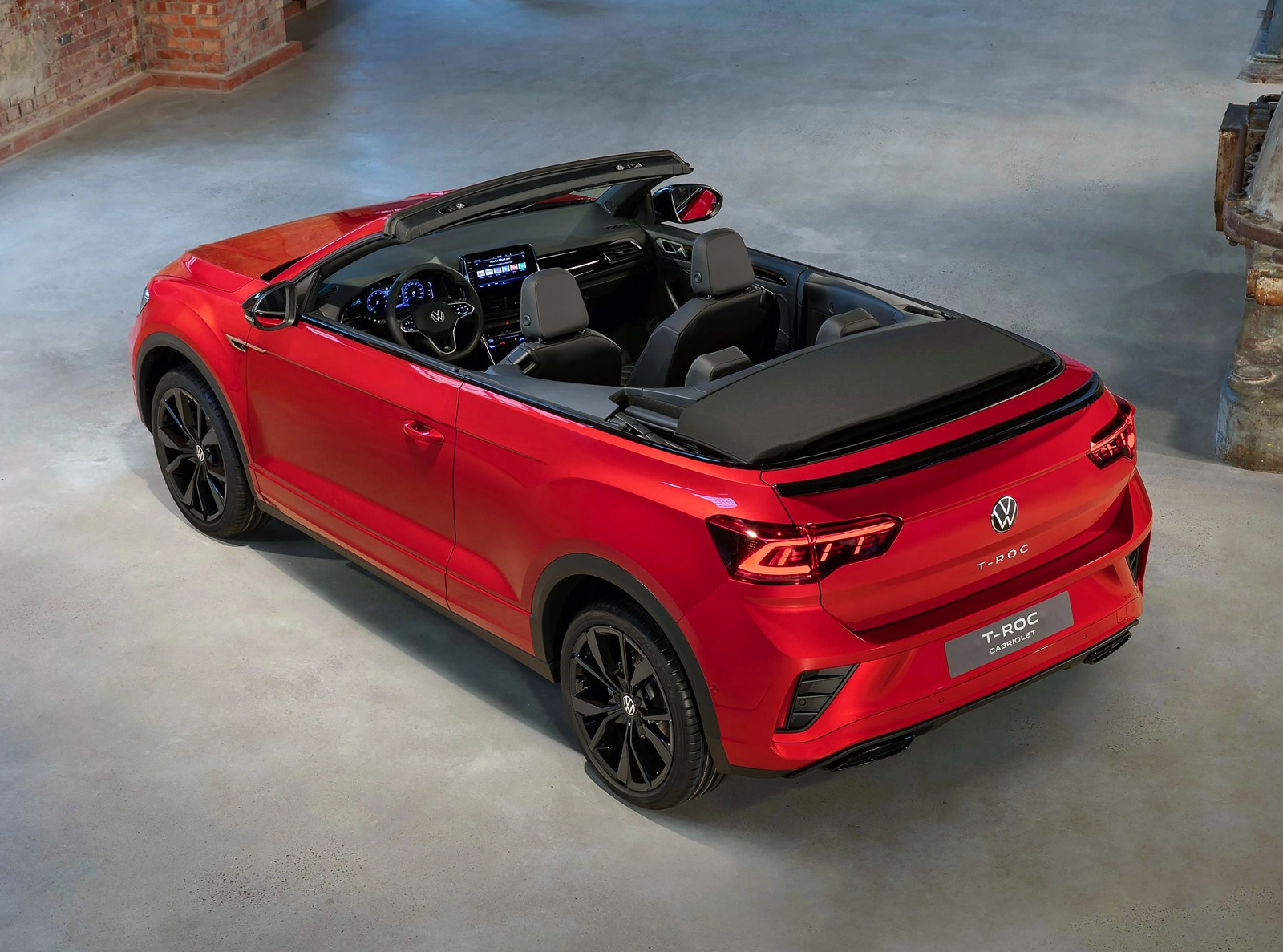
End of an eccentric era: Volkswagen reduces production of T-Roc Cabriolet, scheduled for complete elimination
The global auto market is saying goodbye to one of the most unusual design experiments in recent years. Volkswagen has announced a drastic reduction in production of the convertible version of its T-Roc compact SUV, with the model set to be permanently discontinued next year, in 2027. The decision comes as a direct reaction to the sharp decline in customer interest in the convertible segment, while also leaving the future of the German plant in Osnabrück under great question.
Osnabrück plant, in deadlock: 4-day schedule and rumors of military reprofiling
The drop in orders for the T-Roc Cabriolet is directly affecting operations at the plant in Osnabrück, Germany, where this model is currently the only one produced. A spokesperson for the German group has already confirmed the first crisis measures:
- Extended vacation: Employees' summer vacation has been extended by one week from the usual period to temper inventories.
- Reduced workweek: The plant's more than 2,300 employees will switch to a work schedule of only 4 days a week.
The long-term prospects for this historic factory remain uncertain. In the absence of a direct successor to the T-Roc Cabriolet, an unexpected hypothesis is circulating in the German automotive industry: the redesign and conversion of the factory to produce military equipment. This option has not been officially confirmed by the Volkswagen Group management, however.
The decline of convertible SUVs: A niche that is far too narrow
The decision from Wolfsburg is not a surprise to automotive analysts. The convertible SUV segment has always been considered an extremely risky niche. After the commercial failures of similar models in the past, such as the Nissan Murano CrossCabriolet or the Range Rover Evoque Convertible, the Volkswagen T-Roc Cabriolet remained the last Mohican of this segment on the European mass market.
Modern buyers look for practicality, interior space and safety in an SUV, while a convertible body sacrifices trunk volume, structural rigidity and adds extra pounds due to the fabric roof folding mechanism.
The situation in Romania: High prices for an exotic presence
In Romania, the Volkswagen T-Roc in its standard (hardtop) version is a major commercial success, being one of the best-selling imported compact SUVs. In contrast, the Cabriolet version was seen more as an exotic eccentricity on domestic roads.
How much does the Volkswagen T-Roc Cabriolet cost? On the Romanian market, the starting price for a new T-Roc Cabriolet is around 35,000 - 38,000 euros (for the basic 1.0 TSI or 1.5 TSI engine in the Style entry-level trim). The higher-end variants, such as the sporty R-Line, equipped with generous optional features, easily exceed the 43,000 - 45,000 euro threshold.
Niche sales in the local market
In terms of volumes, sales in Romania are purely symbolic. Market sources indicate that annual deliveries for the convertible version number, at best, a few dozen units nationwide.
Why doesn't it appeal to the Romanian public? In addition to the high price (several thousand euros higher than a similarly configured standard T-Roc), Romanians' purchasing behavior is dictated by pragmatism. The climate with thermal extremes (scorching summers and severe winters), the high level of dust in big cities and the categorical preference for family cars with spacious trunks have transformed the T-Roc convertible into an exclusively weekend car, preferred only by a very small number of enthusiasts.
With the definitive end of production in 2027, the T-Roc Cabriolet will most likely become a rare collector's item, marking the end of an era in which automakers still afforded to experiment outside of classic molds.