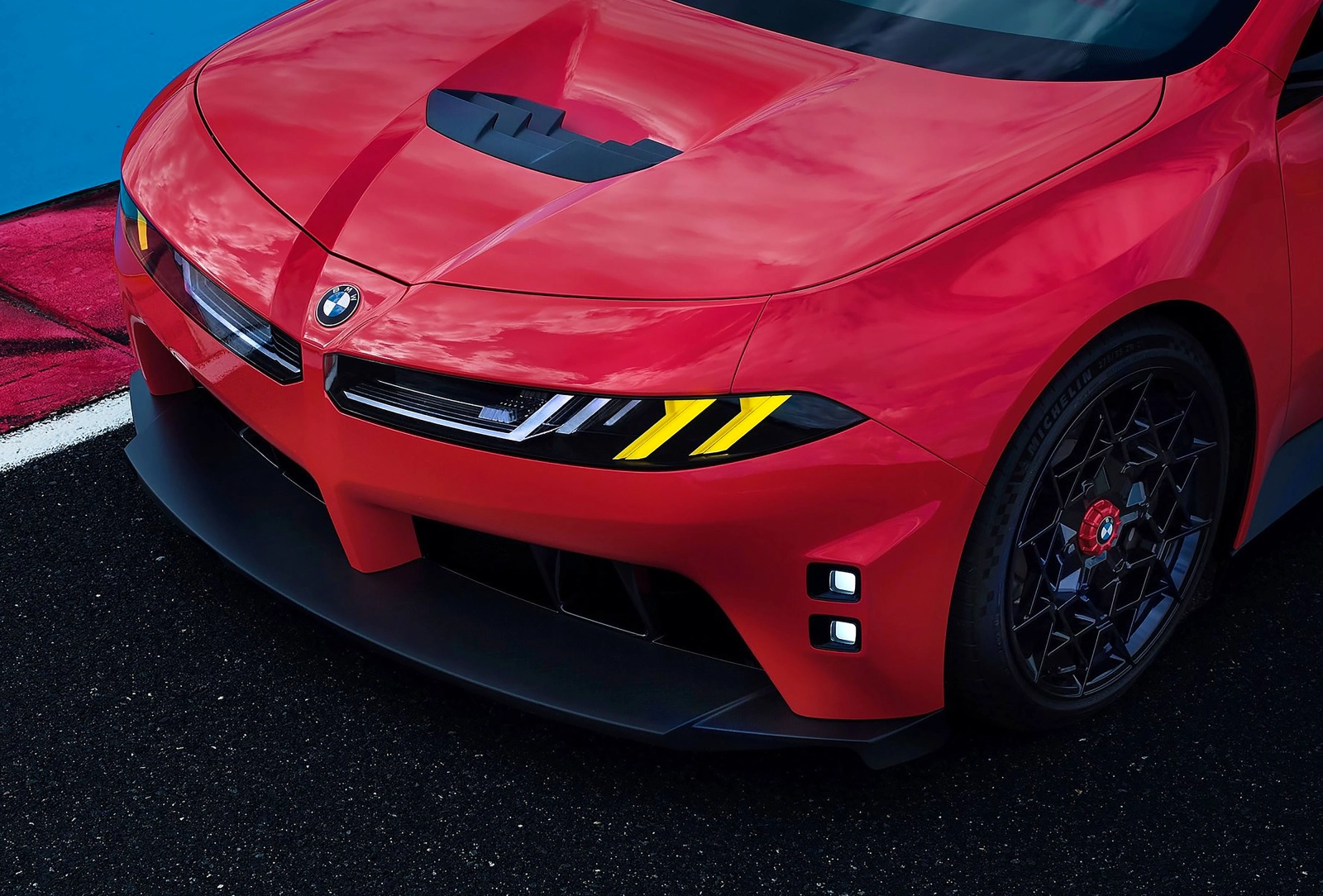
The future BMW M3 refuses the hybrid system and relies on two extremes – pure gasoline with M Ignite technology and fully electric propulsion
The next-generation BMW M3 promises to be one of the most important and radical chapters in the history of the Munich-based performance division. In an automotive industry increasingly crowded with complex and heavy plug-in hybrid systems, the Bavarians have decided to change course and completely eliminate this middle ground for their most iconic model.
Frank van Meel, head of BMW M, has officially confirmed that the upcoming BMW M3 will not have a hybrid or plug-in hybrid (PHEV) version. Instead, fans of the brand will have the choice between two conceptual extremes: a highly optimized combustion engine and, for the first time, a 100% electric version of absolute performance.
"Here we will go to the extremes, not to a middle ground. It will not be hybrid, because we remain faithful to the principle of perfect combustion," said Frank van Meel in a recent interview with PistonHeads at the 24 Hours of Le Mans.
M Ignite: The motorsport technology that saves the combustion engine from Euro 7 regulations
The decision not to turn the M3 into a heavy-duty hybrid (as recently happened with its bigger brother, the M5) is due to a major technological innovation called BMW M Ignite. This is a pre-chamber ignition technology, developed directly in motorsport, which will allow the famous 3.0-liter biturbo straight-six engine (S58) to survive and comply with the new strict Euro 7 regulations, scheduled to come into effect in November this year.
How does M Ignite technology work?
- Two spark plugs per cylinder: The heart of the system is a pre-chamber integrated into the cylinder head, connected to the main combustion chamber. This has its own spark plug and induction coil.
- Ultra-fast combustion: At high speeds and loads, the air-fuel mixture is first ignited in the pre-chamber, generating "ignition jets" that exit at the speed of sound and ignite the mixture in the cylinder at multiple points simultaneously.
- Efficiency without loss of power: The system dramatically reduces fuel consumption under extreme loads (ideal for track sessions) and lowers exhaust gas temperatures, eliminating the risk of engine "knocking".
- VTG turbines: The engine will use variable turbine geometry (VTG) turbochargers and an increased compression ratio for the first time.
Although the thermal version will benefit from a 48-volt mild-hybrid system in Europe for added efficiency when starting and driving in urban areas, it will remain a gasoline-powered engine in the purest sense of the word, keeping the car's total mass within the limits of the M3's specific agility.
Electric extreme: Four engines and track DNA on the Neue Klasse platform
Alongside the petrol engine, BMW will launch the first fully electric M3. It will be based on the new Neue Klasse architecture, recently previewed by the BMW M Concept Neue Klasse.
Contrary to speculation, German officials have suggested that the electric model will not be called the "iM3" but will simply bear the "M3" badge, as the car's philosophy and performance define the brand, not the type of fuel.
The electric version promises to rewrite the rules of dynamics:
- Quad-Motor Configuration: The car will use four independent electric motors, one for each wheel.
- The central brain "Heart of Joy": An ultra-high-performance computer will manage torque delivery to each wheel in milliseconds, providing torque vectoring control impossible to match by a mechanical cardan.
- Track performance: Frank van Meel was keen to stress that the future electric M3 wasn't just designed to be a straight-line rocket, but that lateral dynamics were the main focus of development. The electric variant will actually be faster on the track than the combustion engine.
Availability and price estimate for Romania
The new generation BMW M3 (in both petrol and electric versions) is expected on the market at the earliest in late 2027 or early 2028. The electric version based on the Neue Klasse will likely be the first to be officially presented, followed shortly by the thermal variant with M Ignite technology.
Given the major technological leap, the introduction of the complex M Ignite system for Euro 7 norms and the development costs of the new electric platform, it is expected that prices will undergo an upward adjustment compared to the current generation (G80), which starts in Romania from approximately 95,000 - 107,000 euros (for the Competition xDrive version).
| Estimated Version (Next Generation) | Key Specifications | Estimated Starting Price (Romania) |
| BMW M3 ICE (M Ignite + 48V) | Twin-Turbo Inline-6, Euro 7, RWD/xDrive | ~ €112,000 – €118,000 |
| BMW M3 Electric (Neue Klasse) | Quad-Motor, 800V architecture, over 700 hp | ~ €130,000 – €140,000 |
Note: Prices for Romania include 19% VAT, but final values ??will depend on BMW Group Romania's commercial strategies at the time of launch in 2027.