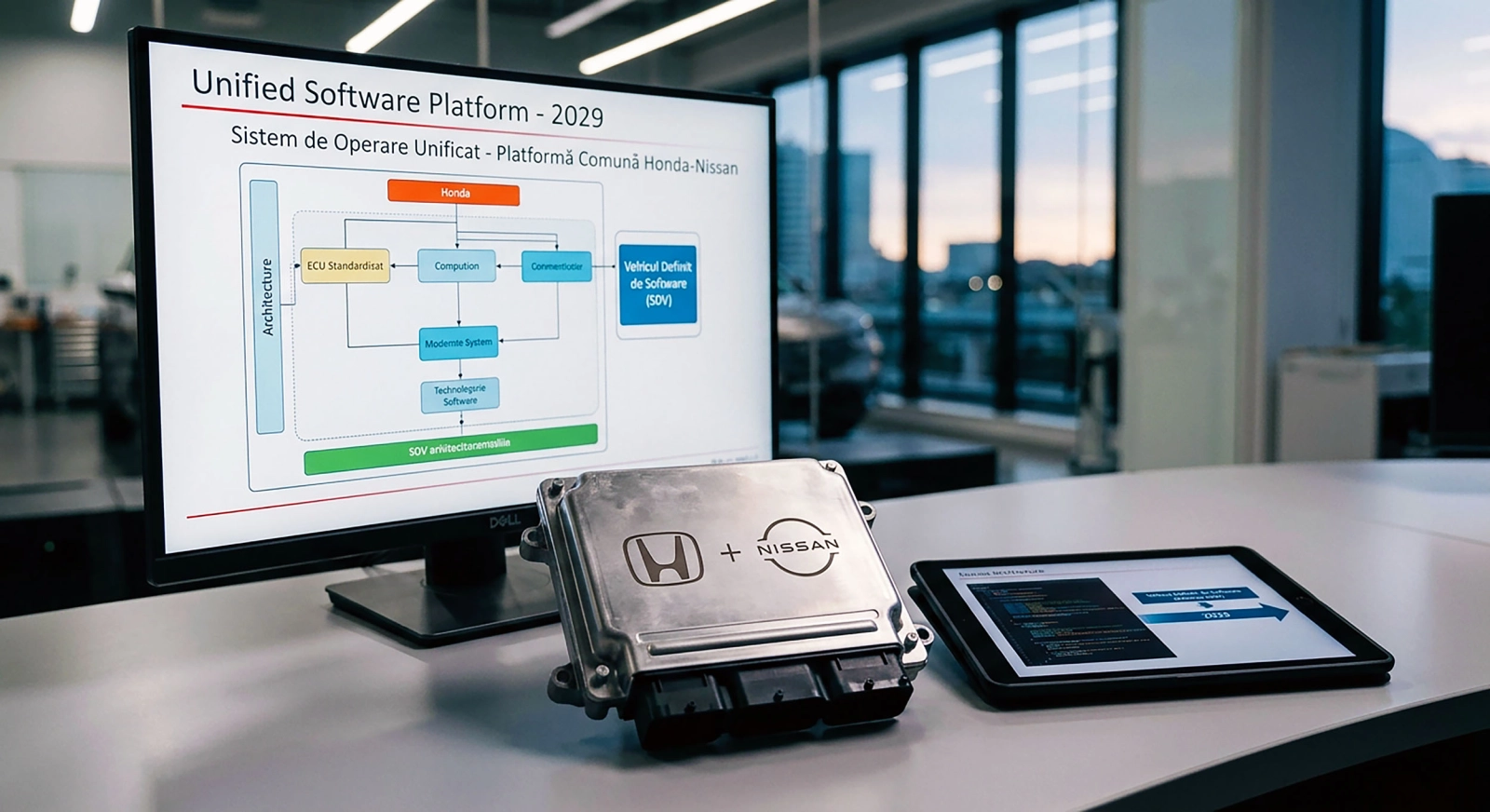
Japan's offensive in the digital age, Honda and Nissan will jointly develop a new car operating system
The global automotive market is witnessing a strategic reconfiguration of industrial alliances, marked by the decision of Japanese manufacturers Honda and Nissan to jointly develop a new generation of automotive software systems. This collaboration, which aims to launch the first Software-Defined Vehicles (SDV) starting in 2029, represents a fundamental paradigm shift for two manufacturers historically known for their fierce rivalry.
Architecture of the future: standardized ECU and common operating systems
The focus of the new partnership is the design of a standardized electronic control unit (ECU). Instead of dozens of fragmented electronic modules that individually control components in conventional cars, the new SDVs will adopt a centralized software architecture.
The main technological integrations established by the two brands include:
- Unified Operating System: Honda and Nissan will establish common specifications for the vehicles' core operating system, providing a homogeneous framework for running in-vehicle applications.
- Over-the-Air (OTA) Updates: The centralized architecture will enable the release of remote software updates throughout the vehicle’s life. Owners will receive performance improvements, new safety features and infotainment system optimizations without the need for a service visit.
- Standardization of electronic components: Using common hardware and software specifications will reduce testing times and accelerate the development cycle of new models.
Why two rivals chose to join forces: The causes of the alliance
The decision to collaborate in the field of digital technology is the result of massive structural pressures that are redefining the global automotive industry.
The decisive factors that drove this alliance are:
- Competitive pressure from China and Tesla's success: Chinese electric vehicle manufacturers (such as BYD) and the American company Tesla have imposed extremely fast innovation rates, focused on native software integration and low production costs. Traditional Japanese manufacturers have been forced to quickly catch up with a significant technological gap.
- Huge research and development (R&D) costs: The move to software-defined vehicles requires billions of dollars in investment in data architectures, cybersecurity, and advanced driver assistance systems. Sharing these expenses allows both companies to remain financially sustainable.
- The need for economies of scale: An advanced automotive operating system only becomes cost-effective if it is deployed in millions of vehicles. By combining Honda and Nissan's global production volumes, the common software platform achieves the scale needed to be competitive on a global scale.
- Strengthening the Japanese automotive industry: The collaboration reflects a broader strategic orientation supported at the industrial level in Japan, aimed at protecting the competitiveness of the national automotive sector in the face of new technology players.
Long-term impact on the global market
Starting in 2029, new models launched by Honda and Nissan will function like intelligent four-wheeled devices, with capabilities that will continuously evolve after purchase. Through this partnership, the two manufacturers are abandoning their individual approaches in favor of a common front, reconfiguring the balance of power in the global automotive industry for the new era of digital mobility.