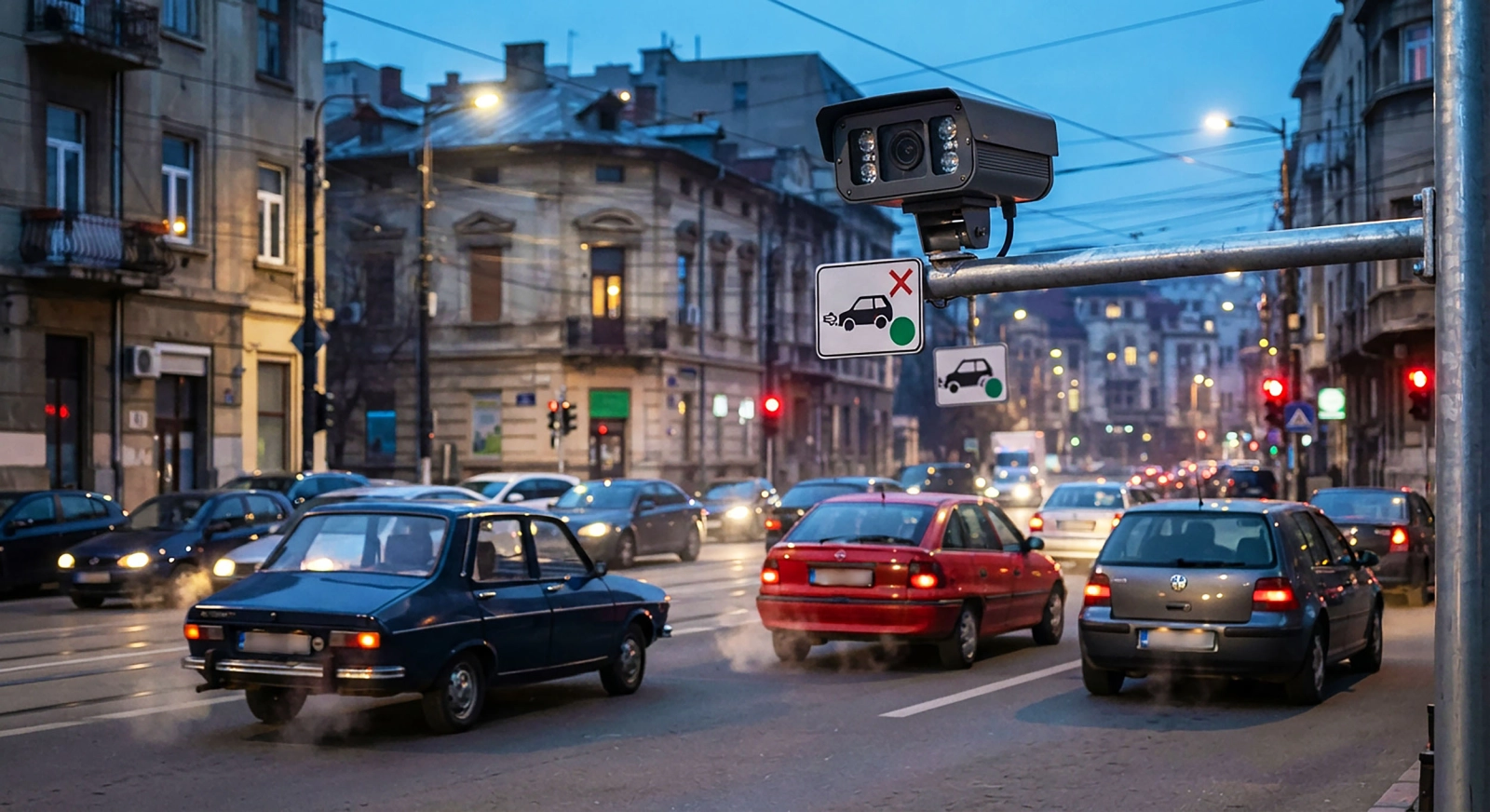
The Urban Planning Code changes traffic, how polluting cars will be limited in cities starting next year
Romania's large urban agglomerations are taking a decisive step towards decarbonization, but the measure comes with direct pressure on the shoulders of old car owners. Starting from 2027, vehicles with high levels of CO2 emissions will be subject to severe traffic restrictions in central and congested areas of the country's major cities.
The change is directly imposed by the new Urban Planning Code, which obliges local authorities to delimit Low Emission Zones (LEZs) within a strict deadline of no more than 12 months from the entry into force of the law.
The legal framework and rules established by city halls
The mechanism by which the restrictions will be applied finds its legislative support in Law 155/2023. This provides city halls with the necessary legal framework to impose:
- Special access fees for polluting vehicles.
- Differentiated access times depending on peak hours.
- Total bans for certain categories of cars, classified according to the Euro pollution standard.
Since each local administration will draw up its own mobility plan, tariffs and access rules will vary considerably from one city to another, being adapted to the local specifics of traffic and pollution.
Technology on Duty: ANPR Cameras and Automated Control
The green transition will not be left solely to classic traffic controls. Monitoring will rely heavily on state-of-the-art technology.
In Bucharest, for example, the City Hall is preparing to implement an intelligent system consisting of ANPR (Automatic Number Plate Recognition) cameras. These devices will:
- Automatically reads the license plates of cars entering protected areas.
- Instantly check in national databases whether the vehicle meets the access conditions or if the fee has been paid.
- Simplify the automatic application of sanctions for drivers who do not comply with the rules.
Challenges and prospects for drivers
The new regulation opens a broad debate in a country where the average age of the car fleet continues to be high. While city governments are betting on cleaner air and decongesting roads, the success of this reform depends on one essential factor: the alternatives offered to citizens.
In order for the 2027 restrictions to not just become a financial burden for drivers, authorities will need to deliver modern, predictable public transport and a solid infrastructure for alternative mobility.