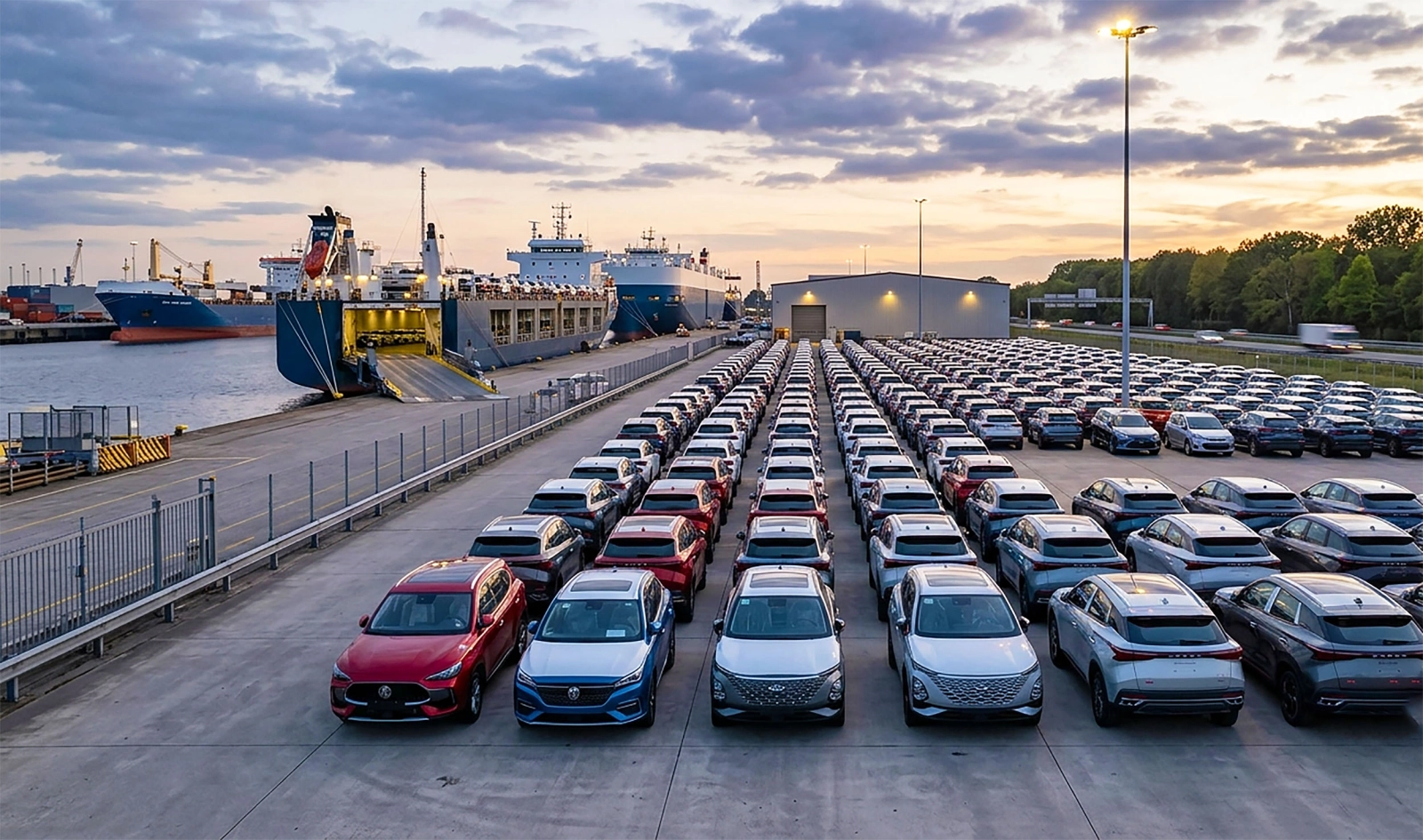
The Assault from the East: How Europe Became the Pole of Chinese Cars, with Romania at the Front Line of Expansion
The European car market is undergoing a historic transformation, and the power dynamics are rapidly shifting East. Chinese car brands are no longer just distant promises or showpieces; they have become an everyday reality on the continent's roads. In May, Chinese brands broke a critical psychological threshold, exceeding 10% of all new vehicle registrations in Europe.
This aggressive expansion is favored by the withdrawal or decreasing presence of traditional European producers in certain key segments. And if in Western Europe the advance is visible, in Romania we are already talking about a true commercial phenomenon.
The Many-Faced Titan: Who is Leading the Chinese Offensive?
China's success is not based on a single name, but on a well-coordinated group strategy focused on cutting-edge technology and massive marketing budgets. The dominant players redrawing the sales maps are MG, BYD, Chery and Geely.
If we analyze gross volumes, MG and BYD remain the most popular individual options. However, the equation changes radically when we look at the structure of the concerns: the Chery group rises directly to the top of the preferences if we also add the results of its new divisions, Omoda and Jaecoo.
The Romanian paradox: The market is declining, but Chinese cars are exploding
In the first five months of 2026, the Romanian car market offered an interesting anomaly. While the European Union recorded an average growth of 4% (reaching almost 4.75 million new registered cars), Romania was the only large EU country to report a severe decline, of over 10%, collapsing to around 48,700 units. The decline was mainly fueled by the collapse of classic engines (gasoline and diesel) and the chronic uncertainties related to the Rabla Program.
However, within this contracted market, Chinese brands are advancing much faster than in the rest of Europe, propelled by the electric and hybrid segment (the only one that is growing rapidly in our country).
What does the battle of numbers look like in Romania:
- BYD and Chery are in a close fight. BYD leads the individual brand rankings with 1,646 cars registered in the first 5 months (a market share of 3.34%).
- Chery, although a discreet presence in major Western markets, has exceeded the 3% threshold in Romania. If we add the satellite brands Omoda and Jaecoo, the Chery Group becomes the absolute leader of Chinese imports locally.
- MG ranks third in registrations, but Romania has become the second most important European market for this brand in percentage terms (4.2% market share), surpassed only by the United Kingdom and ahead of Spain.
Who pays the bill? Collateral victims in the market
The generosity of standard features, fresh technology and, above all, the extremely competitive prices offered by Chinese manufacturers have begun to bite deep into the market shares of established competitors. Three major categories of manufacturers are feeling the shock:
- Japanese brands (except Toyota): Suzuki, Mazda and Honda are losing the most territory to newcomers.
- Korean giants Kia and Hyundai: They face a logistical paradox locally. Both brands are managed in Romania by entities that have also included the distribution of Chinese brands in their portfolio, which fundamentally changes the commercial priorities in showrooms.
- Dacia: Although national pride does not compete directly with the new Asian brands in all segments, the effects are starting to be seen. Traditional customers of affordable SUVs now find in Chinese models much better equipped alternatives, with superior technological interfaces, at similar or only marginally higher prices.
Conclusion of the moment
The European car industry is facing a major imbalance. At a time when Europeans have gradually abandoned budget segments to focus on profitable premium models, China has filled exactly this empty space. With an increasingly solid commercial infrastructure and a growing openness from the Romanian public, Chinese cars are no longer a mere passing trend, but the new standard of the volume market.