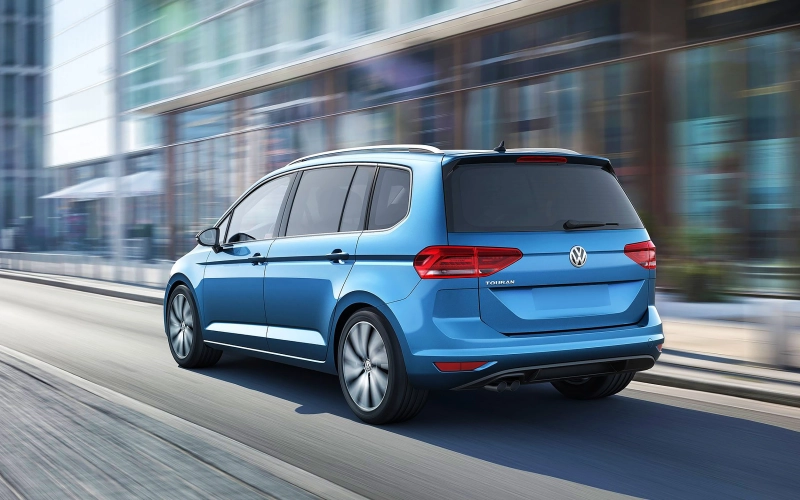
Loved by millions of Romanians, permanently withdrawn from production: What Volkswagen is replacing the Touran with
The era of the minivan is coming to a predictable, but no less melancholy, end. At the end of April 2026, the Wolfsburg plant marked a historic moment: the last Volkswagen Touran left the assembly line, putting an end to a 24-year career in which it served as a “mobile office” and “family coach” for millions of people.
The decision comes three years after its older brother, the Sharan, was withdrawn from the portfolio, leaving a huge gap in the compact MPV (Multi-Purpose Vehicles) segment, a niche that seems to have definitively lost the battle to the onslaught of SUVs.
Euro 7: The Technical “Executioner” of the Model
The reason behind this retirement is not necessarily a lack of popularity — the Touran remained a model appreciated for its pragmatism — but the new Euro 7 pollution norms. These strict regulations, scheduled to come into force in November 2026, would have required massive investments in the model's technical platform to keep it compliant.
Volkswagen has instead chosen to channel its resources towards full electrification (the ID series) and the SUV models that dominate the preferences of current buyers. Thus, on April 29, the Touran's history stopped at the figure of 2.3 million units produced.
The Figures of a Discreet Legend:
- Debut: December 2002 (sales started in 2003).
- Longevity: The first generation lasted 14 years on the market (2002-2016), receiving two major facelifts (2006 and 2010).
- Peak of form: 2004, with over 95,000 registrations (in certain key European markets).
- Generation II: Launched in 2015, it has remained almost unchanged to this day, proof of a "timeless" design based on functionality.
Touran in Romania: From the "German" Car to the Second-Hand King
If in Western Europe the Touran was the favorite car of fleets and middle-class families, in Romania, its story has much more pragmatic accents.
For Romanians, the Touran has long represented the "ideal compromise." It wasn't as massive and difficult to park as a Sharan, but it offered a modularity that a Golf or a Passat couldn't match.
"It is the car that defined the shuttle concept for small Romanian entrepreneurs and the life-saving solution for seaside vacations with grandparents and luggage included."
Why was (and is) he loved by Romanians?
- TDI engines: The 1.9 TDI variant from the first generation has become almost a religion in Romania, being considered "immortal". The low consumption and generous torque have made the Touran a star on car sales websites.
- The 7 seats: In a country where extended family is important, the ability to transport seven people in a reasonably sized body was a major competitive advantage.
- Second-hand market: The Touran remains one of the most traded models on the used car market in Romania. Even now, second-hand, it is sought after for its robust suspension and huge cargo volume (up to 1,980 liters with the seats removed).
What's next after Touran?
Volkswagen has confirmed that there will be no direct successor with a combustion engine. The role of "family carrier" is partly taken over by the Volkswagen Tayron (the new 7-seat SUV that replaces the Tiguan Allspace) and the ID. Buzz, the electric version that tries to recover the bohemian spirit of the old Transporter, but with the technology of the future.
The Touran's retirement marks the end of an era in which design was dictated by passenger needs, not aggressive SUV shapes. For fans of German pragmatism, April 29 will remain a day with a tinge of regret: the last truly useful "box on wheels" has retired.