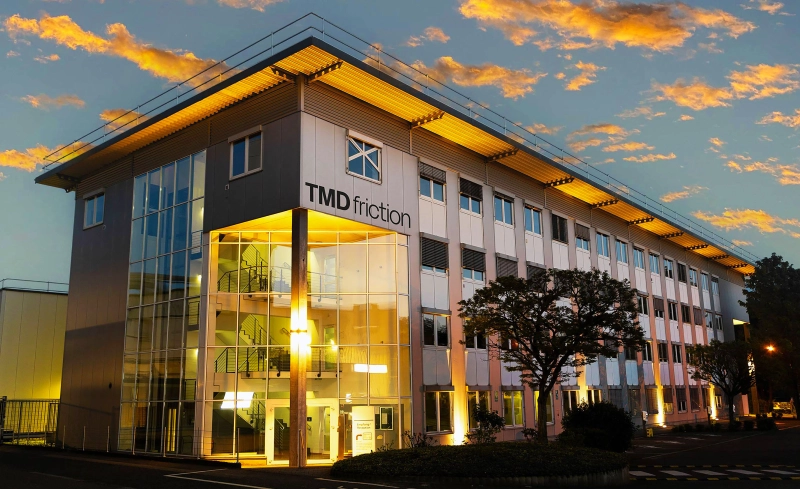
Brakes "made by the sun" in Banat: The Green Revolution in Caransebes produces 2.8 million brake pads with renewable energy
In an effort to rewrite the future of industrial production, TMD Friction’s Caransebes factory marks a historic milestone for the Romanian automotive industry. This year, approximately 2.8 million brake pads will roll off the assembly lines using exclusively solar energy, thanks to a massive investment in its own photovoltaic park.
As the global industry struggles with volatile energy prices and pressure to reduce carbon emissions, TMD Friction – a global leader in friction solutions – has chosen the path to energy independence. At its 23,000 m² production facility in western Romania, the company has completed the installation of one of the largest photovoltaic systems built in a single location in the region.
A two-hectare "solar plant"
The project is impressive in numbers: 3,236 photovoltaic panels were deployed on an area of approximately two hectares. What makes this initiative remarkable is the financing model: the investment was fully supported by its own funds, demonstrating the group's long-term commitment to the Caransebes location.
The system, implemented in partnership with specialists from Servelect, is designed to generate 2,580,000 kWh of green energy annually. This installed power will cover about 14% of the factory's total energy needs. Compared to the production capacity of the unit, this means that every seventh brake pad produced here will be, symbolically, "green".
Environmental impact: 470 tons of CO2 eliminated
Beyond the economic benefits, the factory's ecological footprint is significantly reduced. The new facility will reduce carbon dioxide emissions by approximately 470 tons per year. In a context in which major car manufacturers (TMD Friction's customers) are demanding increasingly sustainable suppliers, the Caransebes unit is becoming a strategic point on the group's European map.
“The investment in Caransebes is not an isolated case, but an essential part of the Sustainability Roadmap 2040,” explain the company’s representatives. The global objective is ambitious: by 2030, all TMD Friction factories around the world must operate 100% with renewable energy.
Caransebes, on the same line as Valencia and Hartlepool
Romania is not the only location going through this metamorphosis. The strategy is being replicated internationally:
- In the UK (Hartlepool): 1,468 panels have been installed, producing 590,000 kWh/year.
- In Spain (Valencia): The 1,101 panels installed already cover almost 12% of the unit's consumption.
- In Germany: A major agreement with Iberdrola will provide, starting from 2027, over 50% of energy from offshore wind sources (Windanker park).
Cutting-edge technology for monitoring
The efficiency of these panels is not left to chance. TMD Friction uses SolarEdge monitoring software, which allows engineers to track the performance of each individual panel in real time. This digitalization of energy consumption allows for the rapid identification of any losses and the optimization of production based on solar intensity.
Conclusion: A model for Romanian industry
Through the Caransebes project, TMD Friction demonstrates that sustainability is not just a theoretical marketing concept, but a viable business strategy. In a city with an industrial tradition, the 3,236 photovoltaic panels are not just a source of electricity, but a guarantee of jobs and the relevance of the factory in a global economy that is becoming greener every day.
Thus, the next time a driver in Europe presses the brake pedal, there is a considerable chance that his safety will be guaranteed by a product created with the help of the Banat sun.