Why is Dacia stopping Duster and Bigster production in Mioveni - Causes, figures and auto market analysis
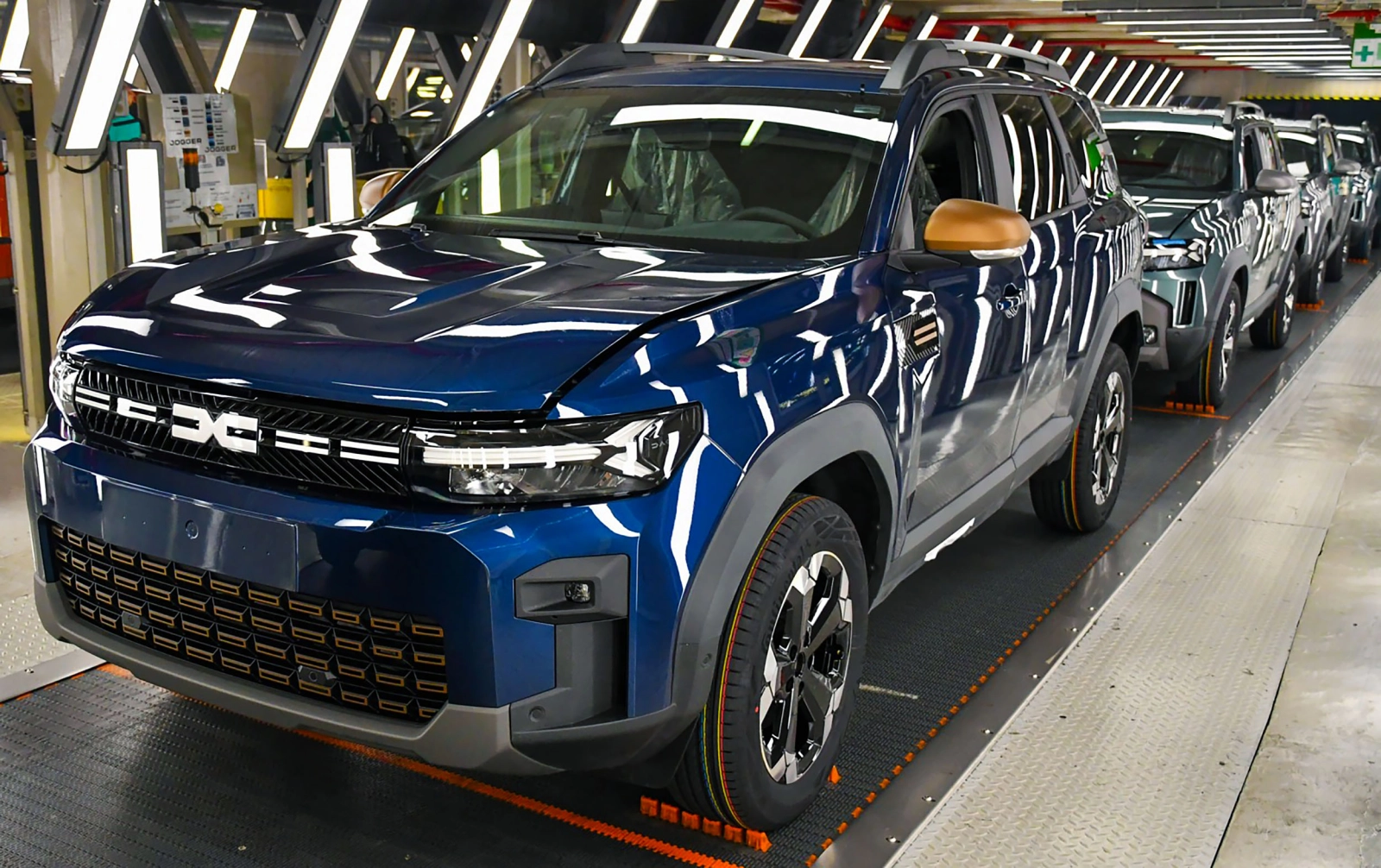
The Dacia Automobile Plant in Mioveni is undergoing a moment of tactical reorientation of the assembly rhythm. The production of the Duster and Bigster models is temporarily stopped for four days, from October 9 to 12, a decision taken to align the manufacturing volume with the current evolution of the order book.
The decrease in demand translates into a daily reduction of approximately 300 cars, with the current assembly rate being lowered to around 1,000 vehicles per day.
The point of view of the employee representatives emphasizes the technical and flexibility nature of this measure. "Regarding the production stoppage, this comes from the fact that the number of orders this month and the production mix are lower. It took days of stoppage to adjust production according to the order book. For now, we have no visibility for the future, but we hope that another stoppage will not be necessary," said Viorel Ungureanu, leader of the Dacia Car Union.
Romanian auto market under pressure: A steady decline in 2026
The decision to reduce the manufacturing pace comes against the backdrop of a clear setback in the national auto market. After the first nine months of 2026, new car sales in Romania recorded a decrease of over 10% compared to the same period in 2025.
The negative trend became more pronounced towards the end of the third quarter. In September 2026 alone, new car registrations fell by over 11% compared to the same period last year. For a large manufacturer, whose assembly lines operate on a continuous basis, such fluctuations in demand require rapid adjustments to inventories.
Reasons behind the decline: Economy, expensive loans and stimulus programs
The shyness of new car buyers is not an isolated phenomenon, but the result of an overlap of economic and structural factors:
- Decrease in purchasing power and the cost of credit: The inflation accumulated in recent years has reduced the purchasing budgets of the population, while the high level of interest rates on consumer loans and leasing has made refinancing or purchasing a new vehicle considerably more expensive.
- Changes in government programs (Rabla): The reduction or reconfiguration of the values ??of eco-bonuses offered through fleet renewal programs has created hesitation in the market. Many customers are postponing their purchase decision in anticipation of clearer conditions or due to the decrease in financial support provided by the state.
- Used vehicle market pressure: Faced with rising prices for new models on the market, a significant percentage of customers continue to turn to the used market, perceived as a more sustainable financial option in the short term.
International competition and slowing European demand
The performance of the Mioveni plant is also closely linked to external dynamics, given that a large part of the production is destined for export to Western and Central European markets.
The major European car markets are also experiencing a period of stagnation or anemic growth. In addition, competitive pressure has intensified with the increasingly visible penetration of Asian manufacturers, which offer affordable and well-equipped models. This expansion is forcing traditional brands to constantly adapt their production mix and commercial strategies.
Adaptation measures and outlook for the coming period
Adjusting production through short breaks is a standard practice in the modern automotive industry, designed to prevent excessive inventory buildup at dealerships and protect operational efficiency.
In parallel with managing the assembly pace, the plant continues the processes of internal efficiency and reorganization of human resources. Although economic uncertainties in the market persist in the short term, the flexibility of the assembly lines remains the main tool through which the manufacturer maintains its financial and operational balance.