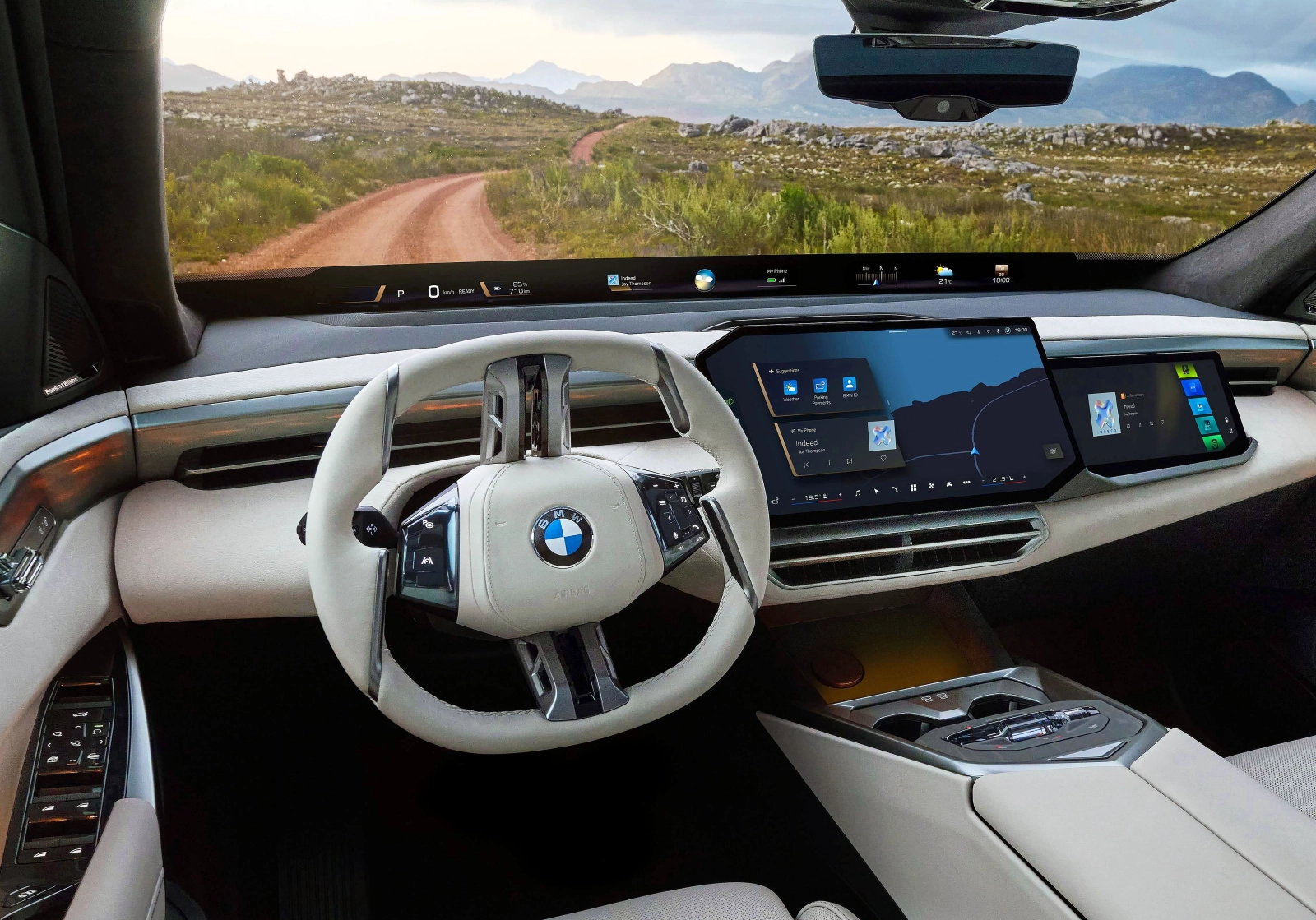
Touchscreen versus analog nostalgia. Why BMW is betting everything on digitalization despite global controversy
The automotive interior landscape has undergone a radical transformation over the past decade. Where once we found generous panels full of mechanical switches, metal wheels and intuitive buttons, today we find clean, minimalist surfaces dominated by colossal touchscreens. This move has been adopted by most global manufacturers, guided by the desire to reduce production costs, provide a futuristic look and facilitate over-the-air software updates.
However, the transition has not been without its turbulence. A telling example is that of the Volkswagen Group, which faced a massive wave of customer dissatisfaction due to the almost complete elimination of physical buttons and the introduction of controversial haptic controls on the steering wheel that were considered difficult to use. The market pressure was so great that the German giant was forced to take a step back, promising and already implementing the reintroduction of physical buttons on new generations of models.
In this climate of ergonomic uncertainty, other brands are taking the opposite path. BMW is among the manufacturers enthusiastically embracing the digital future, with the upcoming Neue Klasse model family almost completely abandoning traditional analog controls in favor of ecosystems based on screens and advanced voice commands.
BMW Vision – Betting on the Young Generation and the Multitasking Lifestyle
For the Bavarians, the decision to remove physical buttons is not a mere fad, but a direct response to the stated preferences of their own buyers. According to internal studies conducted by the company, the brand's customers not only accept the new interfaces, but also prefer them for their increased efficiency in everyday life.
In a recent interview with an international publication, Vikram Pawah, CEO of BMW Group Australia, explained the demographic underpinnings of this strategy:
“We can see that voice and touch are becoming more common. Maybe it’s a generational thing. You would see that a lot of the younger generation, those 45 years old and under, are familiar with these technologies at a faster pace, using voice and touch. They want things to be done quickly and they multitask. And we have to take that into account. That’s how customers are evolving.”
So, BMW's target audience – often made up of customers in the premium and luxury segments, with a dynamic lifestyle and a fast pace – sees touchscreens and voice assistants as a tool to accelerate actions, not as an obstacle.
The contradiction in the market – When official data collides with the reality of safety
BMW's official position, however, raises questions when viewed through the lens of independent studies from the automotive industry and road safety regulations. The argument that touchscreens increase efficiency comes in direct contradiction to numerous studies that show that operating a digital menu on the screen while driving exponentially increases the time the driver takes their eyes off the road.
- Distraction: Road safety organizations around the world point out that a physical button can be operated "blindly" through simple muscle memory, while a touchscreen requires constant visual attention to hit the correct icon.
- Changing regulations: The European safety testing body, Euro NCAP, has announced strict measures that will penalize models that no longer have physical buttons or levers dedicated to essential functions (turn signals, hazard lights, wipers, horn) starting this year (2026).
- Market reaction: While BMW's younger customers seem to embrace digital interfaces, other satisfaction studies show that a huge segment of drivers find the current digitalized cockpit a source of frustration.
This discrepancy suggests that there is a gap between the profile of the high-tech luxury buyer targeted by BMW and the average driver who wants simple ergonomics and distraction-free safety.
The Future of Car Interfaces – Between Digital Innovation and Ergonomic Compromise
Even though BMW is eliminating classic buttons, the German manufacturer is trying to compensate for their absence with intelligent hybrid solutions. In addition to large screens and voice commands strongly integrated with artificial intelligence, the brand's cars use haptic buttons on the steering wheel and Panoramic Vision windshield projection systems (characteristic of the Neue Klasse range), designed to keep the driver's gaze as close to the road as possible.
It remains to be seen whether BMW's strategy will stand the test of time, or whether the pressure of safety regulations and conservative consumer demands will force the Munich division to find a balance between futuristic touchscreens and the tactile ergonomics of the past. What is certain is that, for now, the Bavarians are betting with all their conviction on a digital future controlled by voice and touch.