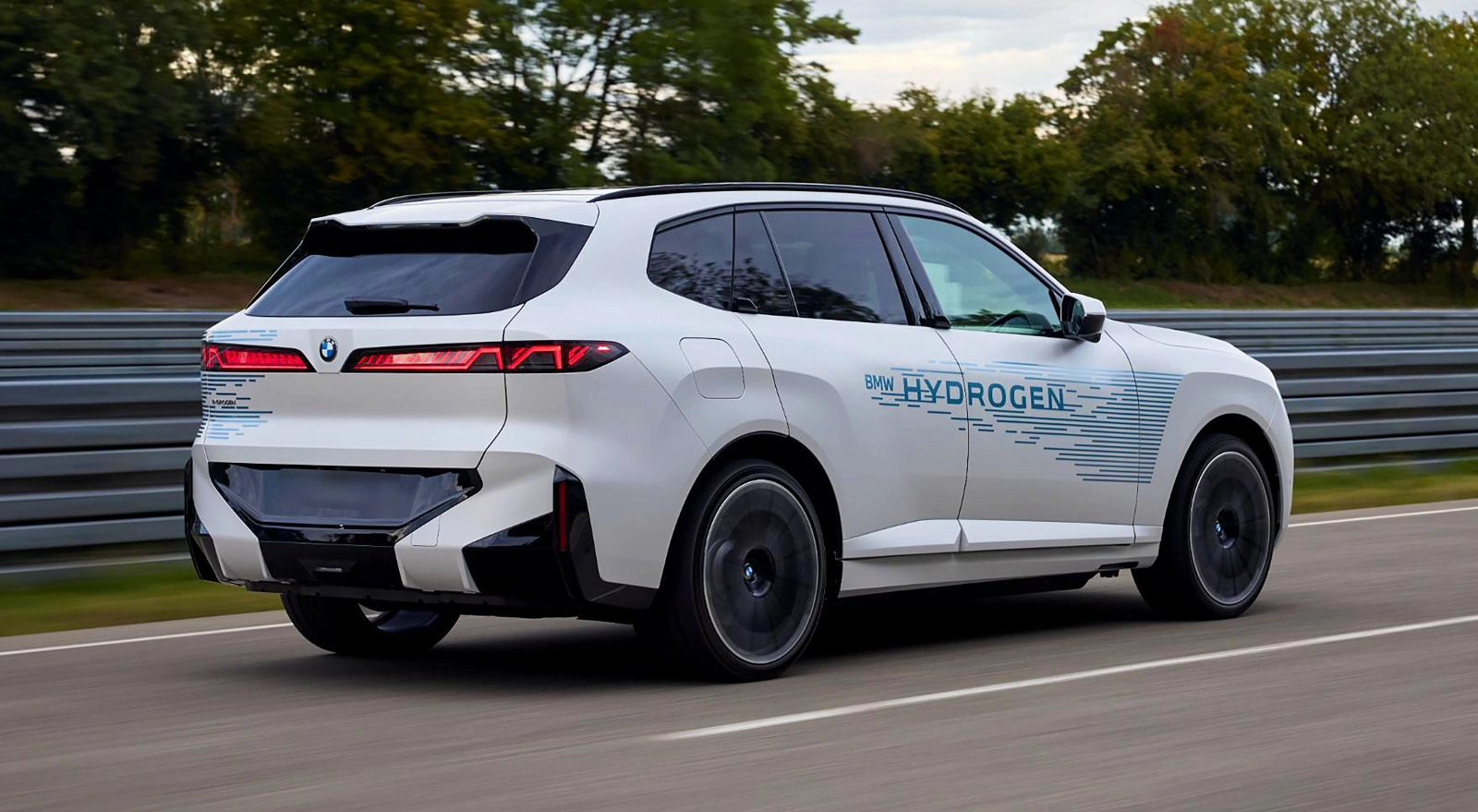
BMW iX5 Hydrogen - The Bavarians accelerate towards series production in 2028
A new chapter in road testing and iX-level performance. The German group BMW has officially entered a new phase of development of the future iX5 Hydrogen, bringing the prototypes of the new generation to real road conditions. The Munich-based manufacturer is validating the hydrogen-based propulsion system through an intensive test program under demanding operating conditions, with the aim of offering driving dynamics identical to those of premium models in the conventional or electric range.
The new development phase aims to achieve perfect integration between the fuel cell system, high-voltage battery, electric motor and the innovative BMW Hydrogen Flat Storage container. The electronic management is coordinated by the Energy Master central unit, designed to maximise the braking energy recovery capacity and increase the overall efficiency of the assembly.
The target figures advanced by the engineers in Munich confirm the brand's typical dynamic performance:
- Acceleration 0–100 km/h: under 5 seconds.
- Estimated range: approximately 750 kilometers (in WLTP cycle).
- Refueling time: less than 5 minutes.
The system allows for fast charging and long ranges without the long waiting times at conventional electric charging stations.
From prototype to series production – The industrial project in Munich and Steyr
The transition to a commercial model in 2028 involves preparing the production network. In parallel with the road tests, BMW has started a new phase of manual assembly and calibration of the third generation of fuel cells at the Hydrogen Competence Center in Munich. This phase serves to optimize the technological processes and define the manufacturing flows that will be transferred to a large scale.
The actual industrialization of the fuel cell system will take place at the engine plant in Steyr (Austria), where the first test benches and dedicated industrial equipment have already been installed. Essential components of the assembly will also be supplied by the BMW plant in Landshut (Germany).
The technology project benefits from joint development with Toyota Motor Corporation and is financially supported by the European HyPowerDrive program (part of IPCEI Hy2Move). The German federal government is contributing 191 million euros and the state of Bavaria is adding 82 million euros for the industrialization of the hydrogen powertrain.
The iX5 Hydrogen is part of BMW's "Technology Openness" strategy. The new generation X5 will allow customers to choose from five different powertrains in one model:
- Benzine
- Diesel
- Plug-in Hybrid (PHEV)
- Battery electric (iX5 BEV)
- Hydrogen fuel cell electric (iX5 Hydrogen)
Price Estimate – How much will the BMW iX5 Hydrogen cost when it launches in 2028?
The final cost estimate for the iX5 Hydrogen depends on the cost of complex technological components, production scale and positioning within the brand's large SUV range.
The fuel cell, 700 bar pressure-resistant carbon fiber tanks, and power electronics are expensive components. However, the procurement and development partnership with Toyota significantly reduces the cost per unit.
Comparative positioning in the BMW range
| Model | Powertrain | Estimated / Starting Price (EUR) |
| BMW X5 xDrive40i / xDrive30d | Gasoline / Diesel Mild-Hybrid | €88,000 – €95,000 |
| BMW X5 xDrive50e | Plug-in Hybrid (PHEV) | €98,000 – €105,000 |
| BMW iX5 (BEV) | Battery Electric | €100,000 – €115,000 |
| BMW iX5 Hydrogen (2028) | Hydrogen Fuel Cell (FCEV) | €110,000 – €125,000 |
Cost analysis and price projection
- Base level: The BMW iX5 Hydrogen will not be positioned as an entry-level model. It will most likely be delivered in top-of-the-range trim levels, comparable to the M Sport versions or the high-performance PHEV/BEV variants. Therefore, an estimated starting price of around €110,000 – €125,000 in Western European markets is realistic for the basic hydrogen version.
- Technology costs: Although production at the Steyr plant reduces the manual manufacturing costs of the previous pilot fleet, the high-pressure hydrogen storage system maintains a premium price tag.
- Subsidies and corporate fleets: In many European markets, the purchase of zero-emission vehicles benefits from tax incentives or fleet support schemes, which could reduce the effective cost of purchase or leasing for companies.
A strategic stake for the energy transition
The launch of the iX5 Hydrogen in 2028 marks the first concrete step by a German premium carmaker towards the mass commercialization of FCEV technology for passenger cars. By creating an industrial assembly line in Steyr and integrating hydrogen directly into the platform of the new generation X5, BMW is demonstrating that it does not see hydrogen as a mere laboratory experiment, but as a complementary pillar to battery electric vehicles.
It remains to be seen to what extent the European 700 bar hydrogen refueling infrastructure will expand by 2028. However, for users who travel long distances and require short stop times, the iX5 Hydrogen promises to combine traditional BMW dynamics with the advantages of fast refueling.