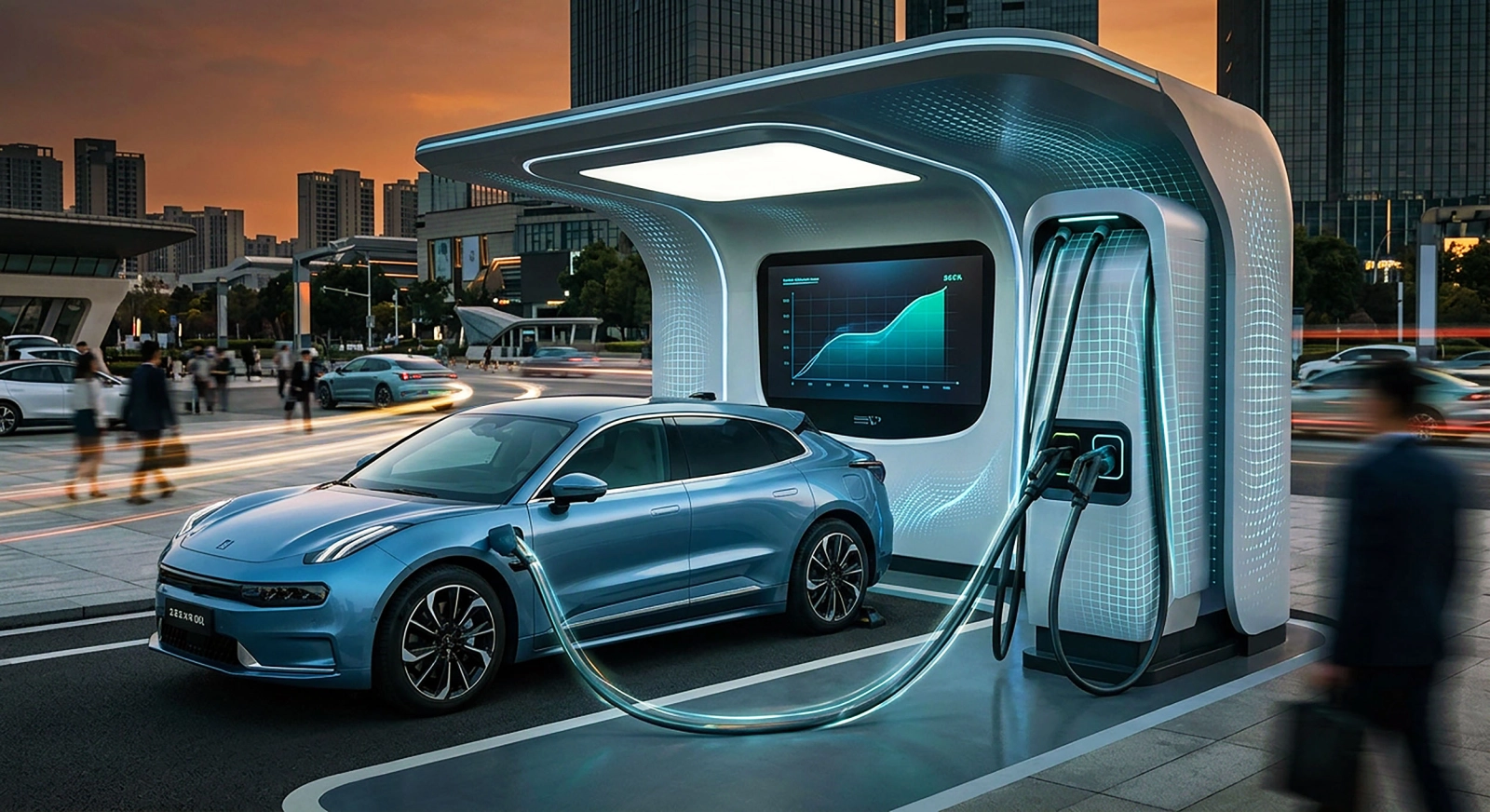
Record charging, from 10% to 70% in just 4 and a half minutes
Chinese carmaker Geely Auto has taken a giant step towards solving one of the biggest challenges of electric mobility: the time spent at charging stations. The car giant has unveiled a new ultra-fast charging system powered by a massive 2.2 MW (2,250 kW) infrastructure, capable of recharging an electric car's battery in an unprecedented amount of time.
In tests conducted under normal temperature conditions, the new technology was able to charge the battery pack from 10% to 70% in just 4 minutes and 30 seconds. Furthermore, a near-complete charge cycle, from 10% to 97%, took just 8 minutes and 40 seconds. These performances bring the charging time of an electric car to the level of a traditional petrol or diesel filling at a conventional petrol station.
Artificial Intelligence and Cloud Simulations: Battery Safety and Longevity
Transferring enormous amounts of electrical energy in such a short time creates major challenges related to overheating and premature degradation of chemical cells. To eliminate these risks, the new Geely system is fully assisted by artificial intelligence (AI) and advanced deep learning algorithms.
Before the actual initiation of the energy transfer, the AI ??system performs an instant assessment of the safety and stability status of the vehicle and the network. The process includes:
- Cloud simulations: The system analyzes battery parameters (cell temperature, degradation level, voltage) in real time and compares them with digital models in the cloud.
- Active thermal control: During the 10% to 97% charging session, the battery temperature is maintained below 55°C for more than half of the process duration (57%), reaching a maximum safe level of 64°C.
- Deep learning algorithms: These adapt current flow based on each vehicle's charging history, maximizing speed without compromising long-term battery life.
12C architecture and the beneficiary models within the group
Charging performance at powers above 2 MW requires not only an ultra-powerful station, but also new-generation batteries capable of absorbing this massive flow of energy. Geely has developed battery cells with a charge rate coefficient of 12C, allowing the delivery of a current 12 times higher than the nominal capacity of the pack.
The first models within the group to benefit from this record-breaking technology and 12C batteries are the new versions of the Zeekr 001 executive sedan and the Lynk & Co 10. Derivative versions of this technology (with 6C charging rates) will also be implemented on the Geely Galaxy compact electric SUV range.
Availability, network challenges and outlook for the Romanian market
The large-scale deployment of this technology is directly dependent on grid infrastructure. The 2.2 MW stations require dedicated high-voltage industrial electrical connections and on-site battery backup storage systems (BESS) to avoid overloading local grids.
Implementation and prospects in Europe and Romania:
- Initial deployment (2026–2027): The first stations in the new Geely ultra-fast network will be installed in major transportation hubs in China, with international expansion targeting major European highways.
- Compatibility in Romania: In Romania, the current public charging network offers stations with powers ranging from 150 kW to 400 kW. Geely, Zeekr or Lynk & Co cars equipped with the new architecture will be fully compatible with existing stations in the country, where they will be able to absorb the maximum power delivered by them (300–400 kW), allowing charging times of 10–12 minutes.
- Future prospects: The implementation of stations above 1 MW in Romania will require investments in photovoltaic parks and dedicated storage stations on pan-European corridors (such as A1 or A3), paving the way for sub-5-minute recharging sessions for Romanian drivers in the coming years.