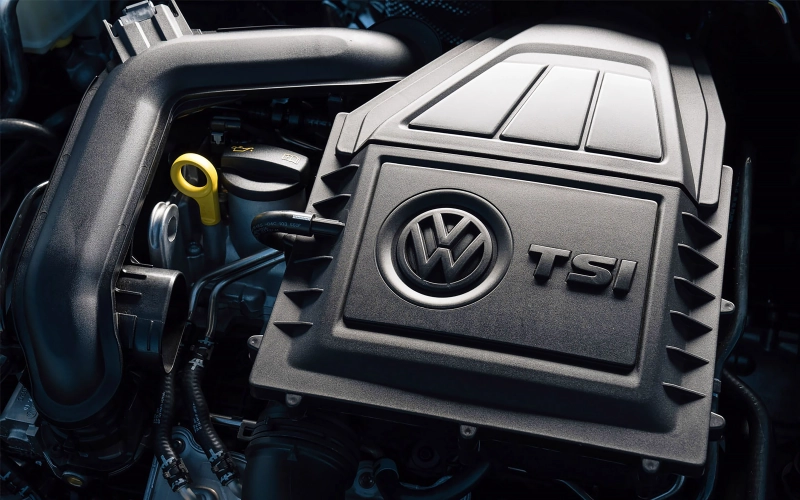
Survival of the turbine-powered "dwarf": How the relaxation of Euro 7 norms saved the Volkswagen 3-cylinder engine
In an auto industry that seemed doomed to a forced and rapid electrification, Volkswagen's small 1.0-liter TSI engine has just been given a new lease on life. The Wolfsburg giant has officially confirmed the resumption of development of the three-cylinder unit from the EA 211 family, after it was initially put on hold due to fears of environmental regulations that would be impossible to achieve without astronomical costs.
One step back to take two forwards
The story of this engine is a perfect barometer of the legislative chaos in Brussels. When the first drafts of the Euro 7 standards were presented, the requirements were so drastic that adapting small petrol engines would have required such expensive filtration and hybridisation systems that affordable cars would have become... unaffordable.
At that point, Volkswagen made the pragmatic decision: to stop development. However, under pressure from manufacturers and some member states, the final version of the Euro 7 standards (which will come into force in November 2026) was considerably “sweetened”. The result? The engineers went back to the drawing board.
"Due to the very strict requirements in the initial versions, we initially decided to stop development. However, in view of the final version of the legislation, we are now investigating the use of this engine for small cars in the portfolio," said Stefan Voswinkel, head of product communication at Volkswagen.
Who stays and who leaves?
Although the 1.0-liter unit is getting a breath of fresh air, the engine map within the VAG Group has already changed irreparably. The "rightsizing" strategy (returning to slightly larger displacements for real efficiency) has already eliminated this engine from compact models.
| Model | 1.0 TSI Engine Status | Current Alternative |
| VW Golf / Skoda Octavia | Phased Out | 1.5 TSI (4 cylinders) |
| VW Polo / Skoda Fabia | Confirmed / Retained | Optimized 1.0 TSI unit |
| Audi A3 / Seat Leon | Phased Out | 1.5 TSI |
| VW T-Cross / Seat Ibiza | Confirmed / Retained | Optimized 1.0 TSI unit |
While the three-piston "midget" survives to keep entry prices low, the performance segment is suffering real losses. The Audi RS3, with its legendary 2.5-liter 5-cylinder engine, has not been as lucky: it will be permanently withdrawn from Europe in 2027, unable to adapt to the new global fleet emissions requirements.
Why is this decision important?
For the average consumer, the news is rather positive. Keeping the 1.0-liter engine in production means that models like the Polo or Fabia will not disappear prematurely from manufacturers' ranges, nor will they suffer spectacular price jumps caused by the mandatory hybridization of larger engines.
However, the resumption of development does not mean that the engine will remain identical. Volkswagen will have to implement technical solutions to reduce particulate emissions from braking and tires (new standards imposed by Euro 7), but also to optimize combustion to meet the nitrogen oxides (NOx) limits in real driving conditions (RDE).
The conclusion?
The internal combustion engine isn't going anywhere anytime soon, but it is increasingly becoming an exclusive "resident" of city segments, where cost efficiency takes precedence over raw performance.
What is your opinion on 3-cylinder engines — do you consider them an honest solution for the city or do you prefer the refinement of a 4-cylinder unit, even if it is more expensive?