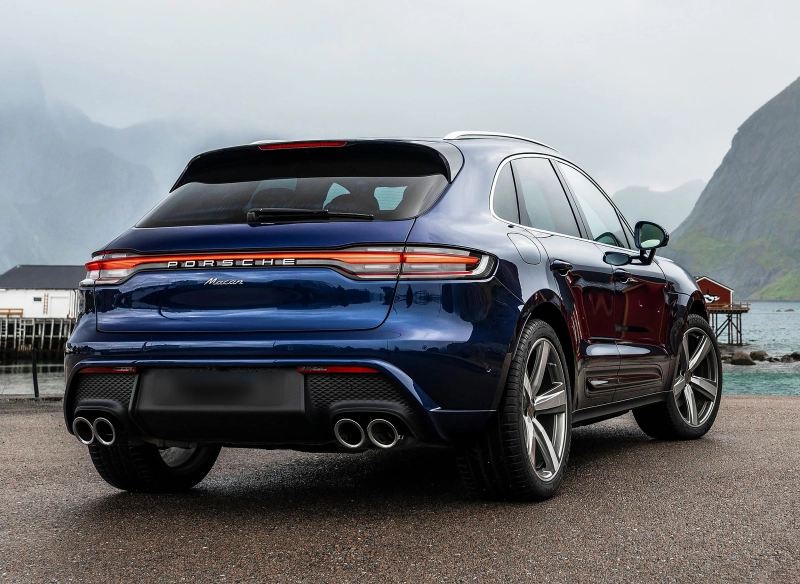
“Mea Culpa” in Stuttgart: Why the Early Removal of the Gasoline Macan Was a Strategic Mistake
Until recently, Porsche seemed to be the absolute champion of electrification in the luxury segment. The success of the Taycan gave the German manufacturer the confidence to bet everything on a risky card: transforming its best-selling model, the Macan, into an all-electric vehicle for the European market. Recently, however, Oliver Blume, in one of his last interventions before handing over the reins of Porsche to Michael Leiters, admitted what many fans and dealers were already whispering in the corners: the withdrawal of the combustion versions was a premature decision.
The paradox of regulations and market reality
The official reason for the withdrawal of the gasoline version in Europe (from July 2024) was the introduction of the GSR2 cybersecurity regulations. The Macan’s old architecture could not be updated without massive investments. Porsche then chose to “sacrifice” the combustion engine model in favor of the new Macan EV.
The mistake, now admitted by Blume, was not necessarily technological, but one of timing. While Porsche was preparing for a 100% electric world, the pace of adoption of battery-powered cars slowed drastically in 2025. The result? A huge gap in the compact SUV range that traditional customers are not yet ready to fill with the electric version.
Porsche Macan in Romania: Gasoline vs. Electric
In Romania, the situation faithfully reflects the Eastern European reluctance to the forced transition to EV. For years, the Macan was the “bread and butter” of Porsche centers in Bucharest, Timi?oara or Bra?ov.
- Demand for combustion engines: On the second-hand market and in used vehicle stocks (Porsche Approved), the gasoline Macan is in high demand. Macan T or Macan S models with few kilometers retain their value much better than new electric ones, because Romanians prefer the versatility of the 2.0 or 2.9 liter engine for long trips.
- Performance of the new Macan Electric: Although technically a masterpiece (the PPE architecture at 800V allows ultra-fast charging), the new Macan EV comes up against the still deficient infrastructure in Romania. In 2024 and the first part of 2025, sales of the Macan electric in Romania were mainly supported by corporate fleets and enthusiastic "early adopters", but they failed to match the volumes that the thermal version generated organically.
Comparison with the competition
While Porsche is left without a gasoline Macan in showrooms, German competitors are taking full advantage:
- BMW X3: The new generation (G45) continues to offer highly efficient diesel and gasoline engines, dominating the sales charts in the premium SUV segment in Romania.
- Mercedes-Benz GLC: Remains a favorite thanks to the varied range of plug-in and diesel hybrids, offering a comfortable alternative for those who do not want to depend on the socket.
| Model | Powertrain Type (Romania 2025) | Market Status |
| Porsche Macan EV | Electric Only | Premium Niche / Tech-focused |
| BMW X3 | Petrol, Diesel, Hybrid | Volume Leader |
| Mercedes GLC | Petrol, Diesel, PHEV | Favorite for Comfort/Family |
What's next? "PPC" is the lifeline
Admitting a mistake comes with a solution. Porsche has already confirmed that it is developing a new thermal SUV for 2028. This will not be a simple update, but a model based on the PPC (Premium Platform Combustion) platform, which it shares with the new Audi Q5.
Although it will not be called Macan (so as not to cannibalize the electric version), this future model has the clear mission of recovering customers lost to BMW or Mercedes. Until then, customers in Romania will have to be content with either the used car market or make the brave leap to electric propulsion.
The conclusion is clear: In an industry that has raced towards electrification, Porsche has learned the hard way that “faster” does not always mean “better” if the market is not ready to keep up.