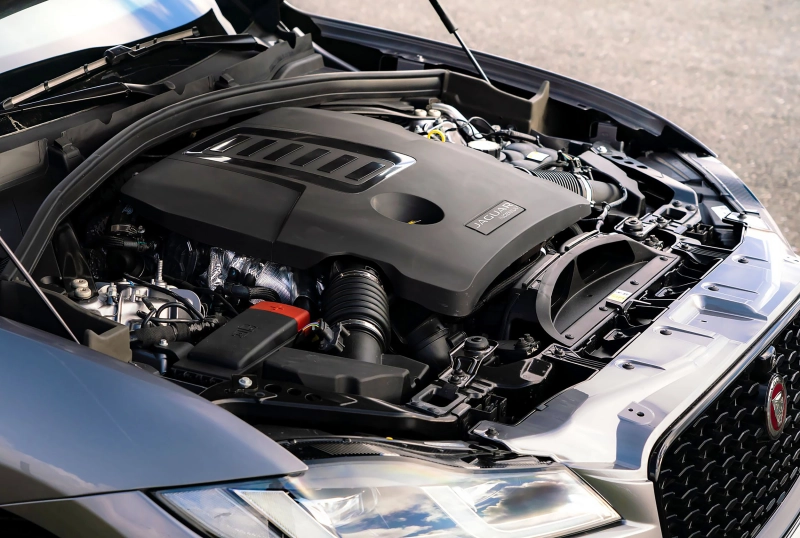
Switch Point in Brussels: EU Abandons 2035 Ban on Internal Combustion Engines
The European Union is making an unexpected U-turn on its flagship mobility policy. The plan to ban the sale of new cars equipped exclusively with internal combustion engines (petrol and diesel) from 2035 appears to have been officially abandoned.
The information, confirmed by Manfred Weber, president of the European People's Party (EPP) - the largest political group in the European Parliament - indicates a major change in strategy, motivated by economic challenges, below-expected sales of electric cars, their high costs and competitive pressure from China.
The New Goal: Reduce Emissions by 90%, Not 100%
According to Weber's statements, the original goal of achieving a 100% reduction in CO2 emissions (which was equivalent to effectively banning internal combustion engines) for new car registrations from 2035 will be replaced with a 90% reduction target.
"For registrations from 2035 onwards, a 90% reduction in CO2 emissions will now be mandatory for manufacturers' fleet targets, instead of a 100% reduction," said Manfred Weber.
This strategic compromise means that a ban on internal combustion engine technology is no longer on the table, providing “planning certainty” for the European car industry. It also appears that there will be no 100% reduction target from 2040, although the final details will be presented by the European Commission.
Basically, it paves the way for so-called "technological neutrality", allowing manufacturers to continue exploring and selling vehicles with internal combustion engines (including plug-in or extended-range hybrids), as long as they can achieve the 90% emissions reduction target, possible through the use of:
- Synthetic Fuels (e-fuels): Considered CO2 neutral, they would allow internal combustion engines to operate without contributing to net emissions.
- Advanced Hybrid Technologies: Plug-in Hybrid (PHEV) and Range Extender Electric Vehicle (REEV) variants could be the compromise solutions to achieve fleet-wide CO2 targets.
Impact on the Romanian Machinery Manufacturing Industry
Romania, being an important hub of the European automotive industry through the Dacia (Renault Group) and Ford Otosan plants, as well as through an extensive network of component suppliers, is strongly affected by any major decision made at the EU level.
Abandoning the 2035 ban has significant implications, particularly by postponing or changing the pressure for a full transition to electric vehicles (EVs):
1. Short-Medium Term Safety for the Production of Thermal and Hybrid Engines
- Maintaining Production: Factories in Romania, which currently produce successful models with thermal and hybrid engines, are getting a breath of air.
- Dacia: Models such as Duster, Sandero or Logan, which in their thermal and hybrid versions represent the backbone of Dacia sales, will be able to continue to be produced and sold for longer.
- Ford Otosan Craiova: Although the plant already produces electric models, maintaining demand for thermal and hybrid vehicles provides flexibility.
- Jobs: The signal sent by the EU is one of stability for the tens of thousands of jobs in the Romanian automotive sector, which are linked to the production of components and the assembly of vehicles with internal combustion engines.
2. Risk of Postponing Investments in EV Conversion
- Mitigation of the Urgency: With the strict 2035 deadline removed, manufacturers may be tempted to withdraw or postpone the massive investments planned for the full conversion of production lines to electric vehicles.
- Supply Chain: Romanian suppliers of parts for thermal engines (which are much more complex and have more components than electric motors) will have a grace period, but this could also slow down their necessary adaptation to EV components.
3. The Challenge of Synthetic Fuels (e-fuels)
- If the new regulation is based on the mandatory use of e-fuels to achieve the 90% emission reduction target, Romania could have an opportunity to develop infrastructure and even production of such fuels. However, their cost and availability remain a big unknown and a logistical challenge.
Conclusion: A Welcome Respite, a Slower Transition
The EU decision, although welcomed by part of the industry (especially the German one) as a measure to protect European competitiveness in the face of China and the troubled EV market, represents a fundamental change.
It offers a precious respite to the Romanian automotive industry, allowing a more gradual and less abrupt transition to new technologies. However, the major risk lies in treating this respite as a total relaxation, instead of an opportunity to accelerate, strategically and with better targeted resources, the development of the low-emission vehicle segment, whether electric or powered by e-fuels. Global competition does not wait, and maintaining European competitiveness now depends on the ability to adapt intelligently to the new rules, not on simply returning to the old paradigm.