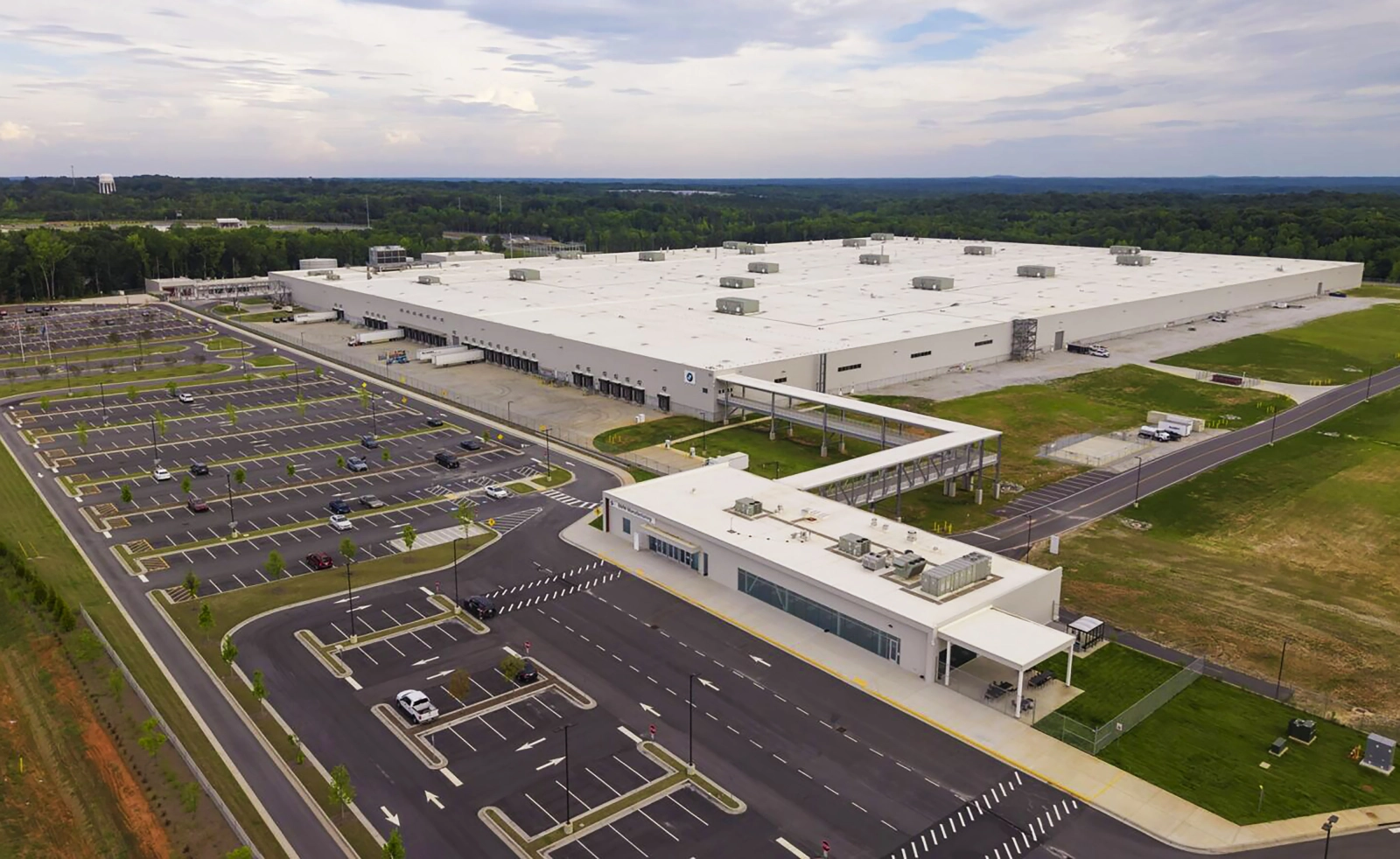
BMW's massive investment in the US with the Gen6 battery factory officially opening its doors near Spartanburg
The BMW Group is marking a key milestone in its global transition to electric mobility with the official inauguration of the high-voltage battery assembly plant in Woodruff, South Carolina, USA. The new industrial facility complements the Bavarian manufacturer’s production ecosystem on the North American continent, being strategically located just 24 kilometers away from the industrial titan in Spartanburg, the brand’s largest plant worldwide. The project reconfirms the company’s long-term commitment to the “local for local” principle and paves the way for the assembly of the first next-generation electric vehicles on American soil.
The timeline of a massive project: From the first sketches to series production
The investment in North America was designed and implemented at an accelerated pace, reflecting the overwhelming importance of the energy transition for the German automaker.
- Groundbreaking (June 2023): Construction work on the new Woodruff plant began three years ago, on a green platform, designed from the ground up to meet the highest standards of eco-efficiency and digitalization.
- Equipment and testing (2024 – 2025): In the fall of 2024, while structural work continued, the first complex production equipment was installed. The validation stages culminated in the summer of 2025, when the first test batteries and pre-series batches rolled off the assembly lines.
- Official inauguration: The plant now officially opens its doors, ready to supply sixth-generation (Gen6) battery packs to the new range of electric models that will be assembled in its immediate vicinity, in Spartanburg, with the plan that by 2027 the network will be completed by the plant in Mexico (San Luis Potosí).
Financial dimension: How much does BMW invest in the US?
The industrial project in South Carolina is part of a massive investment plan, unprecedented in the history of the builder's American subsidiary.
- $1.7 billion financial package: The BMW Group has allocated a total of $1.7 billion to prepare its operations in the United States for the era of electric vehicles.
- Funding Distribution: Of this total budget, $1 billion was directed toward retrofitting and expanding the main Spartanburg plant to manufacture future electric models (including the new iX5), while $700 million was invested directly into the construction and equipment of the state-of-the-art high-voltage battery plant in Woodruff.
Production efficiency: Is manufacturing in the US more advantageous compared to Europe?
The decision of automakers to move or expand production of electric vehicles and critical components such as batteries to the North American market is guided by a series of macroeconomic, energy and legislative factors that differ significantly from the realities in the European Union:
- Energy costs: While the European auto industry – especially Germany – faces extremely high and volatile electricity and natural gas tariffs following recent crises, the United States offers a much more stable energy climate and, in certain industrial regions, considerably more advantageous kilowatt-hour costs for major manufacturing innovations.
- Bureaucracy and legislative flexibility: The administrative structure and authorization procedures in the United States (corroborated by the substantial tax incentives introduced through support packages for green technologies and local production) significantly reduce bureaucratic downtime compared to the cumbersome and highly regulated procedures in the European Union.
- "Local for Local" strategy and logistics independence: Transatlantic transport of such heavy, bulky and logistically complex components as high-capacity battery packs is not only extremely expensive, but also vulnerable to supply chain bottlenecks. Production directly on site, just 24 kilometers from the car assembly line in Spartanburg, eliminates logistical risks and radically optimizes final costs, giving the manufacturer a significantly higher competitive edge in the North American market.