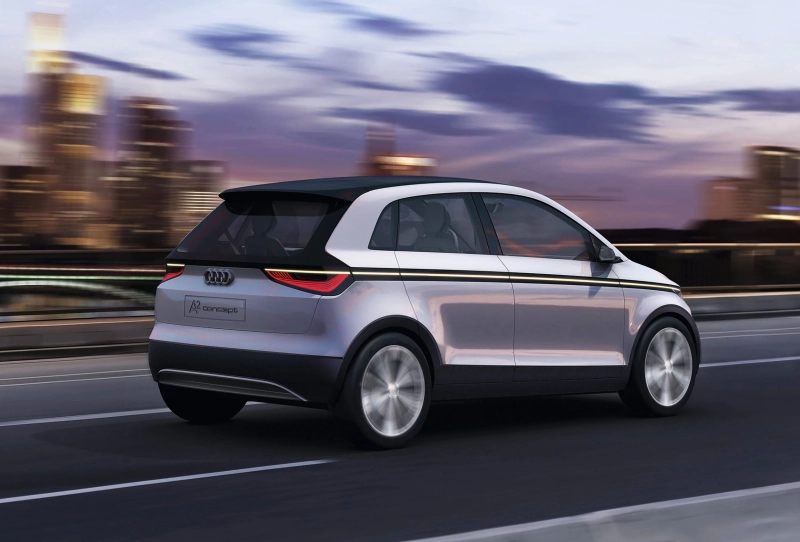
Audi A2 e-tron: The rebirth of a technological legend as the brand's most affordable electric model
Audi is preparing to take a decisive step in democratizing premium electric mobility. After years of focusing on massive SUVs and luxury sedans, the German brand is returning to its roots with an ambitious project: an electric entry-level model that promises to bring back an iconic name – the Audi A2.
The return of the A2 name: An electric hatchback for the city
According to recent reports, the new model will be called the Audi A2 e-tron and will occupy the position of the most affordable electric vehicle in the brand's portfolio, ranking below the current Q4 e-tron and the upcoming A3 electric. The decision to resurrect the A2 name is not accidental; the original launched in 1999 was a pioneer of efficiency, and the new version aims to reclaim this title in the battery age.
The new A2 e-tron will be built on the modular MEB platform (the same one that underpins the Volkswagen ID.3), thus benefiting from a generous interior space compared to the compact exterior dimensions. Visually, although the design was finalized under the baton of former design chief Marc Lichte, the car will adopt a futuristic aesthetic, with a slightly raised hatchback silhouette, optimized for aerodynamics.
Audi offensive from 2026: From Q9 to A2 e-tron
The year 2026 is shaping up to be a turning point for Audi, marking the last generation of new models that will still include internal combustion engines, before the complete transition to electric in 2033. The launch calendar is spectacular:
- Audi Q9: A colossal SUV, designed to compete with the BMW X7 and Mercedes-Benz GLS.
- The new generations of RS5 and Q7: Models that will bring a mix of hybridization and raw performance.
- A2 e-tron: The centerpiece of the volume strategy, aimed at attracting a younger audience and offering a premium alternative in the electric city car segment.
Audi A2 in Romania: A car "understood" far too late
Looking back, the debut of the first Audi A2 (produced between 1999 and 2005) on the Romanian market was one marked by skepticism and amazement. At the time, the domestic automotive landscape was dominated by a preference for large, robust sedans.
1. Price shock: In the 2000s, the Audi A2 was an exotic sight. Built entirely of aluminum (Audi Space Frame), the model was extremely light, but also incredibly expensive. In Romania, the price of a new A2 was dangerously close to that of a more spacious Audi A4, which made many buyers ignore it.
2. The “Aluminum Egg”: Quickly nicknamed the “aluminum egg” due to its unusual shape and body material, the car was viewed with suspicion. Romanians feared the repair costs: in the event of an accident, few service stations in the country had the technology to weld or straighten aluminum elements, and parts were often completely replaced at exorbitant costs.
3. Rehabilitation on the Second Hand Market: Interestingly, the perception changed radically ten years later. With the explosion of fuel prices, the diesel versions (1.4 TDI and the famous 1.2 TDI "3L") became extremely sought after on the second-hand market in Romania. The car that never rusted and consumed 3-4 liters per hundred became, from a commercial failure, a jewel for commuters and enthusiasts.
Conclusion
The Audi A2 e-tron has the difficult mission of erasing the image of “a car too expensive for its size” that its predecessor had. With modern electric technology, an estimated range of over 400 km and the promise of a competitive price for the premium segment, the new A2 could be, this time, exactly the right car at the right time – including for the Romanian market, where urban charging infrastructure is booming.